How to Avoid Fake Influencers in Dubai: The 2026 Brand Protection Guide
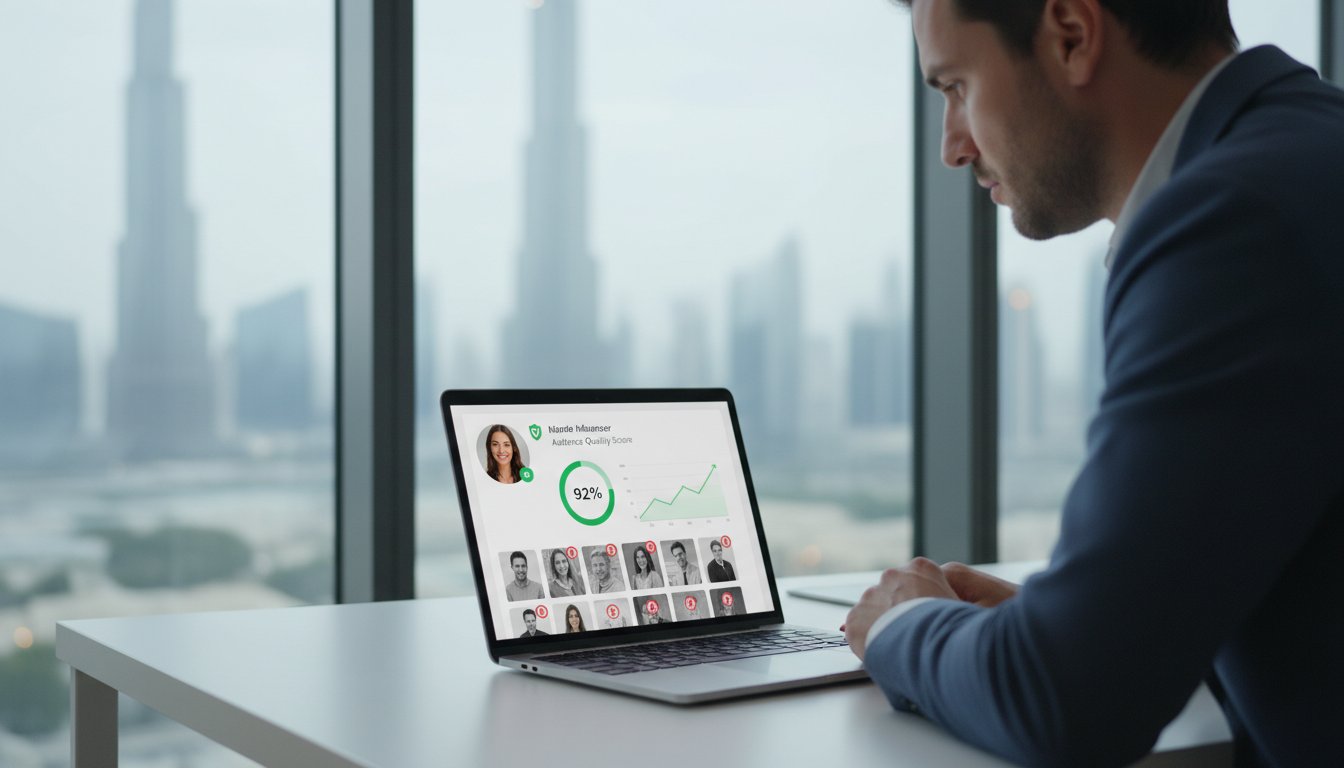
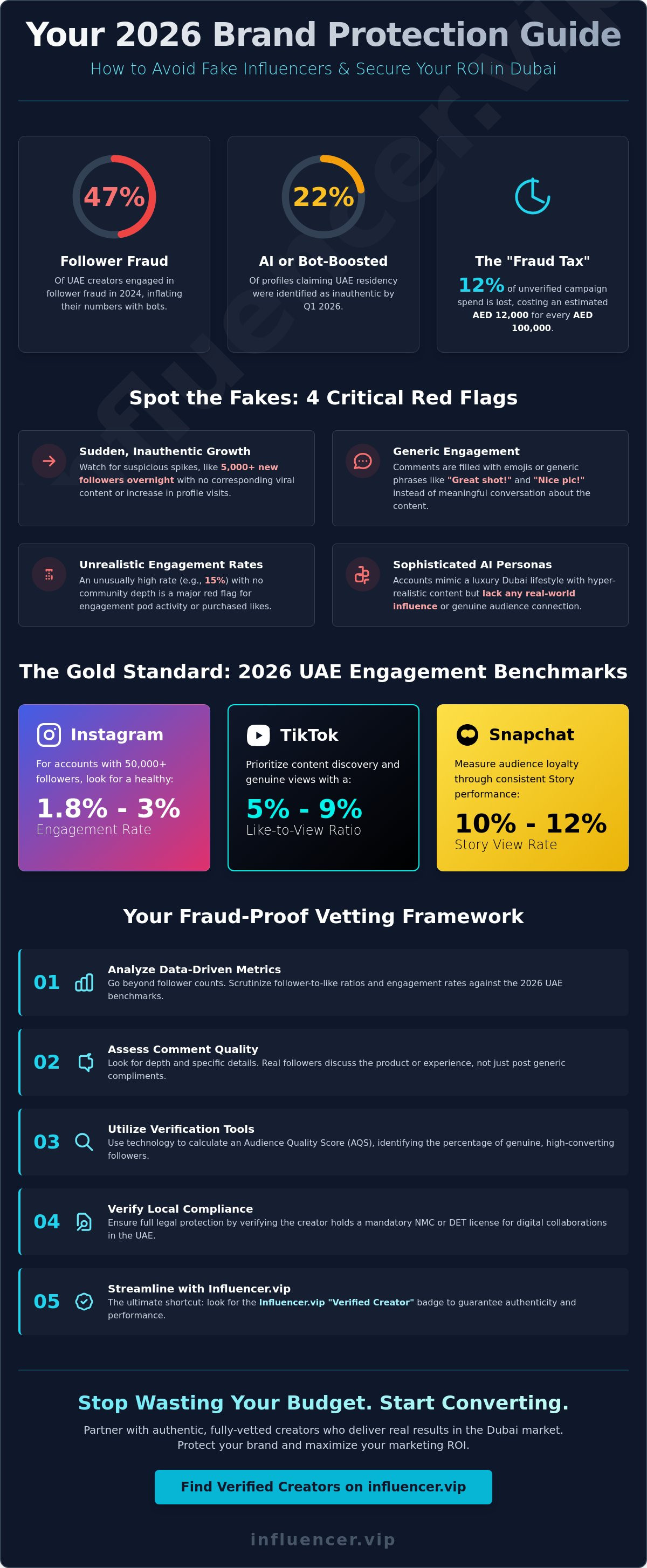
Did you know that nearly 47% of social media creators in the UAE engaged in follower fraud during 2024, according to recent industry audits? It's a sobering statistic that explains why so many marketing managers struggle with how to avoid fake influencers Dubai while trying to scale their reach in a crowded market.
You likely already know the frustration of watching a 50,000 AED campaign result in zero actual conversions because the engagement was coming from bot farms rather than real residents in Downtown Dubai. This 2026 brand protection guide ensures you never waste another dirham on inflated metrics. You'll learn how to spot bot-inflated accounts and secure your marketing ROI using advanced vetting techniques and local Dubai compliance standards. We'll break down the specific red flags to look for this year and provide a verified framework for building authentic, high-conversion partnerships.
Key Takeaways
Identify the evolution of influencer fraud, from simple bots to sophisticated AI-managed personas that target high-budget luxury campaigns in the UAE.
Learn how to avoid fake influencers Dubai by analyzing 2026 benchmarks for follower-to-like ratios and exposing hidden engagement pods.
Utilize data-driven tools to calculate an Audience Quality Score (AQS), ensuring your marketing spend is directed toward genuine, high-converting followers.
Navigate local regulations by verifying mandatory NMC or DET licenses to ensure full legal compliance for your brand's digital collaborations.
Streamline your vetting process using the Influencer.vip "Verified Creator" badge to guarantee authenticity and secure your brand's reputation in the local market.
Table of Contents
The Reality of Influencer Fraud in Dubai’s 2026 Market
Dubai's digital landscape has transformed. By Q1 2026, over 22% of social media profiles claiming UAE residency were identified as either AI-managed or bot-boosted. Understanding how to avoid fake influencers Dubai starts with recognizing that the threat has evolved. We aren't just looking for simple bot followers anymore. Sophisticated AI personas now mirror the lifestyle of the city's elite, posting hyper-realistic content from DIFC or Palm Jumeirah to lure in luxury brands. These digital mimics have no real-world influence, yet they siphon off substantial marketing budgets.
To better understand the risks associated with inauthentic accounts, watch this helpful video:
The UAE is a primary target for these operations. High CPMs and massive luxury brand budgets make the region highly lucrative for fraud networks. When you invest in influencer marketing, you expect a bridge to a real audience. Instead, many brands find themselves shouting into a digital void. The 2026 shift toward "Verified-First" partnerships isn't just a trend. It's a survival strategy for brands that want to protect their bottom line and maintain their reputation in a competitive market.
The True Cost of Inauthentic Reach
Fraud isn't just a nuisance. It's a financial leak. UAE brands face a "fraud tax" estimated at AED 12,000 for every AED 100,000 spent on unverified campaigns. Beyond the direct loss of Dirhams, fake engagement corrupts your customer data. If your CRM is flooded with bot data, your future retargeting efforts will fail. Bots don't buy products. They don't visit showrooms in Al Quoz. They simply inflate numbers while damaging your brand’s standing with social media algorithms, which eventually suppress content that attracts low-quality interactions.
Why Traditional Vetting Methods Fail in 2026
Old metrics are now liabilities. "Drip-feed" bots are the new standard. They bypass basic detection by adding followers and likes slowly over months rather than overnight. A high engagement rate is often a bigger red flag than a low one in the current climate. If an account has a 15% engagement rate but no meaningful community conversation, it's likely a pod-driven illusion. Learning how to avoid fake influencers Dubai requires looking past the surface. Refer to our detailed breakdown on Influencer Marketing in Dubai: The Ultimate Guide for Brands (2026) for more context on these shifting market dynamics.
Red Flags: Spotting Inauthentic Growth and Engagement Pods
Dubai's influencer market is highly competitive. By 2026, identifying high-quality creators requires looking beyond the surface-level vanity metrics that once defined success. Brands in the UAE lose approximately 15% of their marketing budgets to fraudulent accounts annually. Learning how to avoid fake influencers Dubai starts with mastering the data behind the profile.
The follower-to-like ratio is your first line of defense. For 2026, these are the benchmarks for healthy engagement in the Gulf region:
Instagram: Profiles with 50,000+ followers should maintain a 1.8% to 3% engagement rate.
TikTok: Look for a 5% to 9% like-to-view ratio, as the algorithm prioritizes content discovery over follower count.
Snapchat: Story view rates should consistently hit 10% to 12% of the total subscriber base.
Analyze the comment section for depth. Real followers discuss specific details, such as the quality of the wagyu sliders at a DIFC restaurant or the seating comfort at a new luxury cinema. If a creator's posts are filled with generic emojis or "Great shot!" remarks, they're likely failing to drive actual influence. You should also watch for sudden growth spikes. Organic viral success typically builds over 48 to 72 hours with high share counts; bot purchases often result in 5,000 new followers appearing overnight on a quiet Tuesday with zero increase in profile visits.
The Anatomy of a Dubai Engagement Pod
Engagement pods are collectives of creators who artificially boost each other's metrics through coordinated likes and comments. In the UAE, these often operate in private WhatsApp or Telegram groups. You can spot them by looking for the same 40 to 60 local accounts commenting on every single post within minutes of publication. This circular engagement creates a facade of popularity that rarely translates into sales. Professional brand managers now use tools to map account-to-account interaction patterns, flagging profiles that share more than 70% of the same "top commenters" across their last ten posts. To ensure your budget reaches real customers, consider utilizing verified vetting services that filter out these artificial networks.
AI-Personas and Deepfake Creators
The rise of AI has introduced a new challenge for Dubai brands: the digital human. While some AI models are transparent, others masquerade as real lifestyle influencers to secure luxury sponsorships. Check for "uncanny valley" artifacts in high-end content. Look closely at skin textures, hair strands against complex backgrounds, and the positioning of fingers on products. Authentic creators have a digital footprint that spans years and multiple platforms. If a "lifestyle" influencer suddenly appeared in late 2025 with perfect 8K imagery but no historical presence or tagged photos from real-world Dubai events, they're likely a synthetic persona. Always request raw, unedited video footage to verify the creator's physical existence before signing a contract.
Data-Driven Detection: Using Technology to Verify Creators
Manual vetting no longer protects your marketing budget in a landscape where bot technology evolves daily. By 2026, AI-powered marketplace tools serve as the first line of defense. These systems monitor account growth in real-time to flag suspicious spikes. If a profile gains 10,000 followers overnight without a corresponding viral event, the software identifies it as a bot injection. This level of scrutiny is essential for brands that value efficiency and genuine reach.
The Audience Quality Score (AQS) is the gold standard for verification. This metric aggregates data on engagement authenticity and follower reachability into a single score. A creator with an AQS below 70 represents a significant risk to your ROI. Mastering how to avoid fake influencers Dubai starts with prioritizing these data-backed insights over vanity metrics like total follower count. High-quality platforms now provide these scores automatically to streamline your selection process.
Audience Location Vetting
A Dubai-based creator whose audience is 80% based in Brazil or Indonesia is a liability. Your campaign budget, which might involve thousands of AED, shouldn't be spent on eyes that can't visit your store or use your service. Specialized tools now map the exact geographic footprint of a creator following. You should aim for a minimum of 35% local UAE audience density for any domestic campaign to ensure your message reaches the right demographic.
Check for language alignment within the engagement. If a creator posts about a new cafe in Jumeirah but the comments are exclusively in a foreign language or generic emojis, the engagement is likely manufactured. Genuine local influencers spark conversations about Dubai-specific topics. They use local terminology and reference recognizable landmarks, creating a comment section that reflects the city's diverse but localized community.
Historical Performance Audits
Stop accepting static media kits. These documents are often outdated or intentionally misleading. Request live backend screenshots or use Influencer Marketplace Access to view verified historical data. This transparency ensures you see the actual impressions and saves you from inflated figures that rarely materialize. Verified data helps you understand how to avoid fake influencers Dubai by exposing the difference between public likes and private reach.
Apply the Brand Loyalty test to every potential partner. If an influencer promotes three competing fragrance brands in a single week, their credibility is non-existent. Recent industry data shows that 68% of UAE consumers find frequent brand-switching to be a sign of inauthenticity. Look for creators who maintain consistent partnerships over several months. This consistency proves they value their audience's trust more than a one-time fee, ensuring your brand message actually resonates with a loyal following.
The Local Edge: Verifying Dubai-Specific Compliance and Audience
Understanding how to avoid fake influencers Dubai requires looking past follower counts and into the legal framework of the UAE. If a creator lacks the proper credentials, they're likely cutting corners elsewhere. In a market as regulated as the UAE, professional creators treat their presence as a business, not just a hobby. Verification starts with the law.
NMC and DET License Verification
Advertising is a regulated profession in the Emirates. Any creator charging for content must hold either a National Media Council (NMC) license or a permit through the Department of Economy and Tourism (DET). Ask for a copy of their trade license before signing any contracts. Unlicensed influencers often operate outside the law, which puts your brand at risk of legal scrutiny and potential fines. Verified creators will provide their license number without hesitation. This step is the fastest way to filter out accounts that lack professional standing. For more on the legalities of production, see our Dubai Filming Permits for Influencers: The Complete 2026 Compliance Guide.
Cultural Sentiment and Language Vetting
Analyze the comment section for local dialect, specific Dubai references, and Khaleeji or Levantine Arabic. If a creator claims a Dubai audience but the engagement consists of generic English emojis from accounts in distant regions, they've likely purchased bots. Cultural sentiment is the alignment between creator content and local UAE values. Authentic Dubai creators engage with specific local topics, such as new district launches or seasonal shifts in the city. Look for 70% or more of the engagement coming from UAE-based profiles. This ensures your message reaches residents with actual purchasing power in AED.
Apply the 'Mall Test' to verify real-world influence. A true Dubai influencer has a physical presence. They attend local events and are recognized in high-traffic areas like Dubai Mall or City Walk. Digital-only existence is a major red flag. Cross-reference their recent posts with official filming permits. Since 2025, the Dubai Film and TV Commission has tightened rules on professional filming in public spaces. A creator who can show they've obtained official permits for high-quality shoots is much more likely to be a legitimate partner. This level of organization separates professionals from those inflating their status with fake metrics.
Request a valid UAE trade license or NMC permit number.
Check for Arabic-language engagement from local accounts.
Verify their presence at physical Dubai events and locations.
Review their history of obtaining filming permits for public content.
Ready to work with legitimate talent? Find & hire top influencers who meet every UAE compliance standard.
Building a Fraud-Proof Strategy with Influencer.vip
Manual vetting is no longer a viable strategy for brands operating in the competitive UAE market. As bot technology evolves, learning how to avoid fake influencers Dubai requires more than just a keen eye; it demands a system built on verified data. Influencer.vip eliminates the guesswork by acting as a secure gateway between your brand and the region's most reliable talent. Our platform doesn't just list names; it curates a high-performance environment where authenticity is the baseline, not an afterthought.
The 'Verified Creator' badge serves as our gold standard for authenticity. Every profile undergoes a rigorous audit that analyzes audience growth patterns and engagement quality. If a creator shows signs of inflated metrics or suspicious follower spikes, they don't make the cut. This transition from manual hunting to a secure marketplace environment is the ultimate answer for brands asking how to avoid fake influencers Dubai while scaling their reach. By centralizing your search, you remove the risk of falling for vanity metrics that don't translate into sales.
Why Vetted Marketplaces are the Future
Efficiency is the primary driver for successful Dubai brands in 2026. Hiring from a pre-screened directory of verified creators allows marketing teams to bypass the weeks of background checks usually required for new partnerships. We use proprietary data to monitor for sudden bot influxes, ensuring that a creator's audience remains genuine throughout the duration of your campaign. This proactive monitoring protects your brand reputation before a single post goes live.
Data-Driven Security: Our algorithms detect non-human engagement patterns in real-time.
Proven ROI: A Dubai-based luxury retail brand reported a 40% increase in campaign ROI after switching exclusively to our verified creators.
Market Specificity: We focus on creators with genuine influence within the UAE, ensuring your AED spend reaches local consumers.
Setting up performance-based contracts is the final layer of protection. We encourage brands to move away from flat-fee structures that reward follower counts. Instead, use our platform to tie compensation to specific milestones like click-through rates or verified conversions. This ensures every dirham in your marketing budget is tied to tangible business outcomes rather than empty "likes."
Next Steps for Your 2026 Campaign
Success in the modern influencer landscape starts with a cautious, data-first approach. Start with a small test campaign to verify conversion data before committing to long-term contracts. This allows you to see how a creator's audience responds to your specific brand voice without risking a large upfront investment. For businesses that require more comprehensive support, our Influencer Marketing Services provide end-to-end campaign security, from talent selection to final reporting.
The UAE market moves fast, and your brand protection strategy must move faster. Don't let your 2026 budget disappear into a sea of bots. Protect your brand and connect with verified Dubai influencers today at Influencer.vip.
Secure Your Brand’s Future in the Dubai Digital Landscape
Navigating the 2026 market requires more than a quick glance at a follower count. To maximize your marketing spend in the UAE, you must prioritize data-driven verification and local compliance. Learning how to avoid fake influencers Dubai businesses encounter often means looking past vanity metrics to analyze engagement pods and bot-driven growth. By shifting your focus to authentic creators who hold real influence in the Emirates, you protect your budget from being wasted on ghost followers.
Don't let your campaign become another statistic of influencer fraud. Secure your ROI by partnering with a platform that does the heavy lifting for you. We provide access to a network of 100% verified UAE creators, backed by proprietary AI-driven fraud detection that filters out inauthentic activity instantly. Our streamlined process is so efficient that 92% of our brands find the right influencer within 48 hours. It's time to build partnerships that drive actual conversions in the local market.
Hire Verified Dubai Influencers and Protect Your ROI
We're excited to see your next campaign reach its full potential in the UAE.
Frequently Asked Questions
How do I check if a Dubai influencer has fake followers for free?
Start by manually auditing the follower list for accounts without profile pictures or those with alphanumeric strings as usernames. Use free versions of tools like HypeAuditor or Modash to see growth graphs; a sudden spike of 10,000 followers in 24 hours is a major red flag. This manual verification is the first step in learning how to avoid fake influencers Dubai brands often encounter during peak shopping seasons.
What is a good engagement rate for influencers in the UAE in 2026?
Aim for a 3.5 percent engagement rate for nano-influencers and at least 1.8 percent for mega-influencers. In 2026, the UAE market benchmark for mid-tier creators sits at 2.4 percent. Rates below 1 percent usually indicate a passive or purchased audience. High-quality creators in Dubai often exceed these numbers through active community management and authentic storytelling that resonates with local residents.
Can an influencer with a legal NMC license still have fake followers?
Yes, a National Media Council (NMC) license only confirms legal permission to conduct commercial activities. It doesn't verify audience quality or authenticity. The 2026 regulations focus on tax compliance and permits, not follower audits. You must still perform due diligence because a licensed creator can still purchase bots to inflate their perceived market value and increase their charging rates for AED 5,000 plus campaigns.
What are engagement pods and why are they common in Dubai?
Engagement pods are private groups where creators agree to like and comment on each other's posts instantly. They're common in Dubai because the competitive market rewards high initial engagement with better algorithm visibility. You'll spot them by seeing the same 15 to 20 local accounts commenting within minutes of every upload. These comments are often repetitive, low-value praise that doesn't lead to actual brand sales.
How can I tell the difference between a real influencer and an AI-generated persona?
Check for the "AI-generated" disclosure tag required by UAE media laws as of 2026. Look closely at skin textures and hand positions, as AI often struggles with these specific details. Real influencers post raw, behind-the-scenes Stories with natural background noise. AI personas typically feature perfectly polished environments and lack the spontaneous, imperfect interactions found in genuine human content across Dubai's social media landscape.
What happens if I accidentally hire a fake influencer for my brand?
You waste your marketing budget and risk a zero percent return on investment. Beyond financial loss, your brand's reputation suffers if your ads appear alongside bot-filled comment sections. Data shows that 42 percent of UAE consumers lose trust in brands that partner with non-authentic creators. It's a costly mistake that drains your resources without delivering any actual customer conversions or meaningful brand awareness.
Is it possible for an influencer's audience to be mostly outside of Dubai?
It's very common, especially for travel or lifestyle creators. Audit the audience location data to ensure at least 50 percent of the followers reside within the UAE. If a Dubai-based influencer has a 70 percent audience share in a different continent, your local campaign won't drive foot traffic to your Dubai Mall store. Understanding these metrics is vital for how to avoid fake influencers Dubai businesses might otherwise overpay.
How often should I audit the influencers I currently work with?
Conduct a full audit every 90 days. Influencer health changes quickly, and an account that was authentic in January could join engagement pods by April. Regular quarterly reviews ensure your AED spend remains efficient and impactful. Use these audits to track growth patterns and ensure the creator's audience still aligns with your brand's target demographics in the UAE market throughout the year.
Comments
Leave a Comment
No comments yet. Be the first to share your thoughts!
Related Posts
How to Find the Right Influencers for Your Brand in the UAE in 2026
Finding influencers in the UAE is easy. Finding the right influencers is not. Learn how to select creators based on audience, location, niche, engagement, authenticity, and campaign goals.

Influencer Marketplace vs Agency: Choosing the Right Solution in 2026
74% of marketers plan to increase their influencer marketing budgets in 2026, yet many are still losing up to 30% of that spend to opaque fees. When deciding between an influencer marketplace vs agency, the stakes are high. You’re likely tired of the exhausting manual search for creators and the con…

Real Estate Drone Videography Dubai: 2026 Guide & Best Drones for Luxury Listings
In the 2026 Dubai property market, a high-resolution drone video is no longer a luxury; it's the bare minimum for entry. You likely recognize that standing out in oversaturated districts like Dubai Marina or Palm Jumeirah requires more than just standard listings. The complexity of navigating drone…