Influencer Campaign Timeline Example: The 2026 Strategic Roadmap for Brands
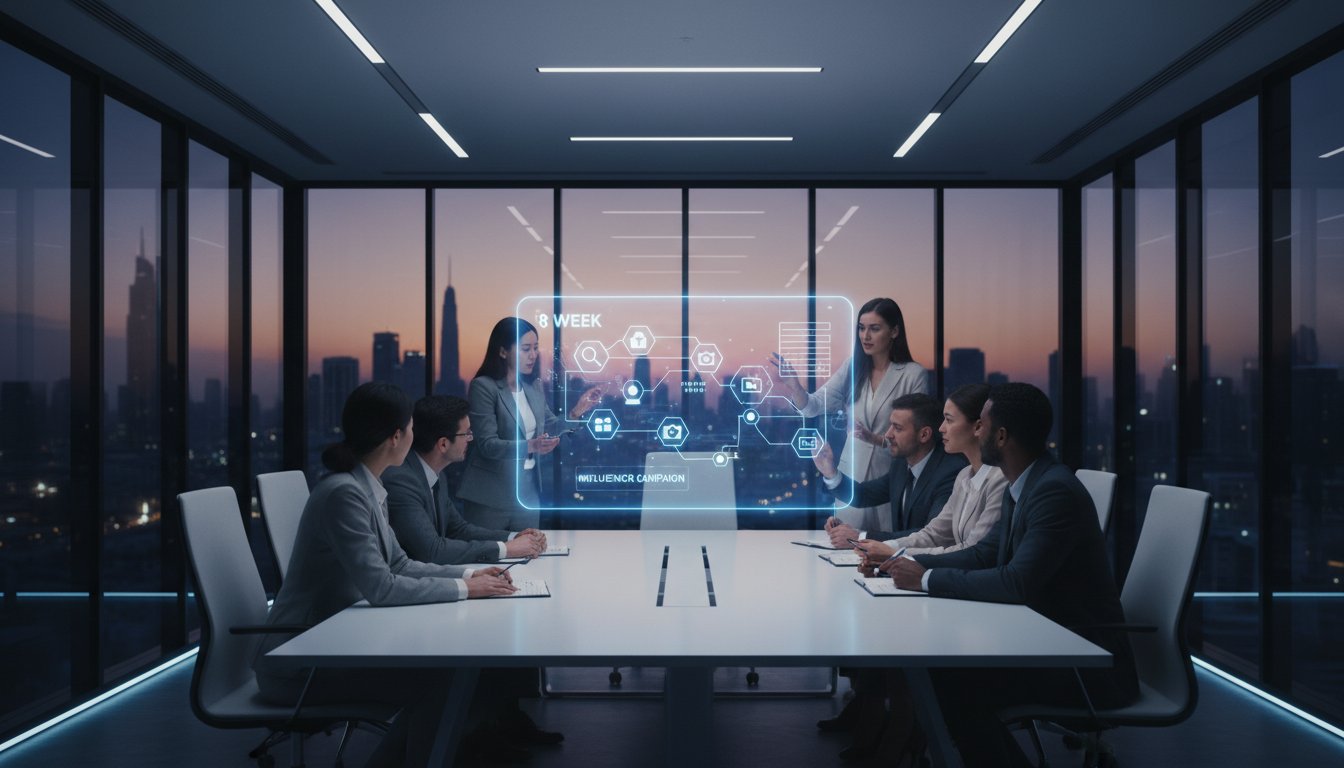
With the global influencer marketing industry hitting $32.6 billion in 2026, brands now earn an average of $5.78 for every dollar invested. However, high returns require more than just a handshake; they demand precision. If you've ever dealt with last-minute content scrambles or missed a launch date because of a messy approval workflow, you know that a lack of structure is your biggest liability. Implementing a professional influencer campaign timeline example is no longer optional if you want to avoid the $51,744 FTC fines that come with compliance slips or poor disclosure management.
We understand the frustration of trying to balance high-quality creative production with unrealistic expectations from management. You need a system that works. This article provides a strategic 8-week roadmap designed to eliminate bottlenecks and secure predictable results. You'll master a repeatable framework that accounts for everything from vetting verified creators to navigating the latest UAE permit mandates. We will show you how to transform your workflow into a streamlined ROI engine that delivers premium content every single time.
Key Takeaways
Master a structured 8-week influencer campaign timeline example to secure predictable launch dates and maximize your campaign ROI.
Reduce your discovery phase from 14 days to just 48 hours by utilizing a verified influencer marketplace and standardized contracting tools.
Protect your brand's legal standing in the UAE by factoring mandatory media permits and commercial licenses into your strategic scheduling.
Enhance content quality by shifting from casual mobile captures to professional photography and videography production workflows that drive engagement.
Eliminate creator bottlenecks through a specialized two-week vetting phase that ensures high-tier talent alignment and authentic audience connection.
Table of Contents
The 8-Week Influencer Campaign Template: A Phase-by-Phase Breakdown
Content Production & Approval: Managing the 2026 Creative Workflow
Regional & Global Variables: Adjusting Your Timeline for the UAE and Beyond
Accelerating Execution: How Marketplaces Streamline the Campaign Lifecycle
The Architecture of a High-ROI Influencer Campaign Timeline
Successful Influencer marketing in 2026 relies on a disciplined approach to scheduling. It's no longer effective to send a direct message and hope for a post the next day. You must manage a professional lifecycle across five pillars: Research, Outreach, Production, Launch, and Analysis. Most high-performing brands adopt an 8-week influencer campaign timeline example to balance creative quality with operational speed. This duration provides enough space to verify creator data and ensure content aligns with your brand's premium standards while keeping the project moving forward at a steady pace.
Unforeseen delays are a common cause of campaign friction. Whether it's a shipping delay for a product sample or a creator requiring a content revision, you must account for the unexpected. Apply the Golden Rule of scheduling by adding a 20% time buffer to every phase. If your production window is ten days, set your internal deadline for twelve. This proactive strategy ensures you never miss a hard launch date due to minor administrative hurdles or creator bottlenecks. Using a template with built-in flexibility allows your team to remain calm and efficient even when variables change.
To better understand this concept, watch this helpful video:
Why Speed is the Enemy of Authenticity
Rushing the vetting phase is the fastest way to invite influencer fraud and inflated engagement metrics. When creators feel pressured by a short deadline, they resort to "copy-paste" content that lacks personal flair. This lack of effort signals to their audience that the partnership is purely transactional, which destroys trust. Short windows also strip you of negotiation power. High-tier verified creators often prioritize brands that offer professional, respectful lead times over those demanding instant turnarounds. The Rushed Campaign Penalty represents the direct loss of ROI when high fees meet low-quality execution.
Setting Realistic KPIs Before the Clock Starts
Your schedule should be a direct reflection of your business goals. A product launch demands a synchronized "Hard Launch" where all creators post within a 24-hour window to dominate the social feed. Brand awareness campaigns often benefit from a staggered approach that builds momentum over several weeks. Your choice of platform also impacts the clock. YouTube integrations require significant research and editing, while TikTok content thrives on rapid, trend-based execution. Start with your target launch date and work backward to set milestones that your team can actually achieve.
The 8-Week Influencer Campaign Template: A Phase-by-Phase Breakdown
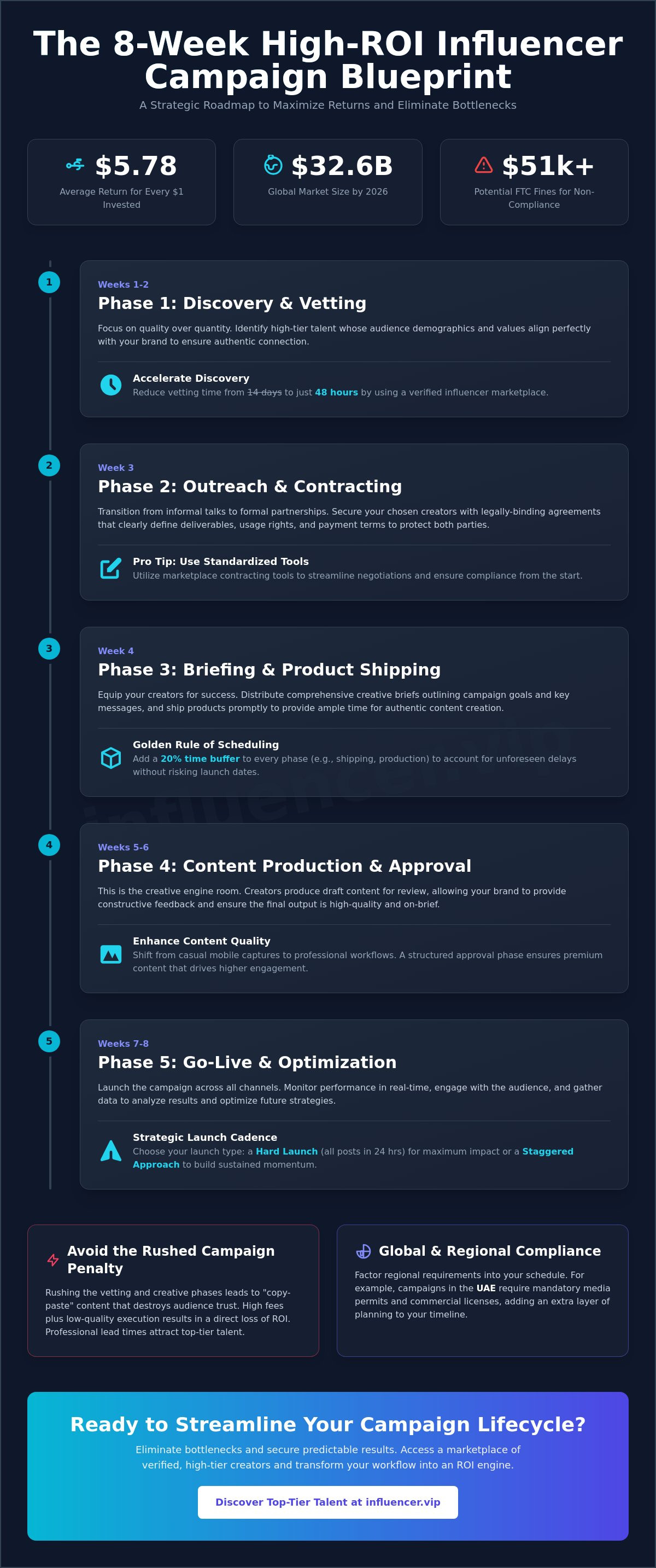
A successful campaign requires a granular approach to every milestone. This 8-week influencer campaign timeline example serves as a blueprint for brands seeking to balance high-end production with operational efficiency. By breaking the lifecycle into manageable phases, you ensure that every stakeholder, from upper management to the creative talent, remains aligned on expectations and deadlines.
Phase 1: Discovery & Vetting (Weeks 1-2). Focus on quality over quantity. Identify talent whose audience demographics match your target market.
Phase 2: Outreach & Contracting (Week 3). Secure your partnerships with legally binding agreements that protect both parties.
Phase 3: Briefing & Product Shipping (Week 4). Distribute clear creative briefs and ship product samples to ensure creators have everything they need to begin.
Phase 4: Content Production & Approval (Weeks 5-6). This is the creative engine room where creators produce drafts and brands provide feedback.
Phase 5: Go-Live & Optimization (Weeks 7-8). Launch the campaign and begin real-time data monitoring to refine performance.
Weeks 1-3: The Foundation of Discovery
Efficiency begins with your selection process. Accessing a verified creator directory allows you to skip weeks of manual vetting and background checks. Once you identify potential partners, follow the 3-day rule for initial outreach. If a creator doesn't respond within 72 hours, move to the next candidate to maintain your momentum. Your contracts must include explicit clauses regarding usage rights and exclusivity to prevent delays later in the schedule. This clarity ensures that both the brand and the creator understand the scope of work before the clock starts on production.
Weeks 4-6: From Logistics to Content Creation
Logistics can often be the weakest link in your schedule. If you are an international brand, allocate a mandatory 10-day buffer for shipping products to ensure they clear customs without delaying the production start date. Set a firm First Draft deadline for Week 5. This gives you ample time for a single round of revisions without overwhelming the creator. Effective feedback focuses on technical requirements like lighting or brand mentions while respecting the creator's unique voice. If you need help refining your strategy, you can speak with our campaign specialists to optimize your workflow.
Content Production & Approval: Managing the 2026 Creative Workflow
In 2026, the digital landscape is crowded. Generic content fails to capture attention. Your influencer campaign timeline example must prioritize high-production value to cut through the noise. Move beyond the expectation of simple phone selfies. Professional-grade assets are the new standard for brands targeting high-conversion rates. High-tier creators now act as creative directors, and your schedule must accommodate their need for technical excellence.
Integrating influencer photography services into your workflow transforms a standard post into a long-term marketing asset. This requires a "Two-Stage" approval protocol to maintain efficiency. First, verify the raw footage to ensure all brand safety requirements and key messages are present. Second, review the final edit for creative flair and pacing. This structured approach catches errors early. If a reshoot is necessary, you can execute it during Week 6 without jeopardizing your Week 7 launch date.
Scheduling Professional Shoots (Drones & Photography)
Cinematic content like drone videography adds a layer of prestige to your campaign. However, these shoots require specific permit windows and weather buffers. Don't leave these variables to chance. Coordinate your creator's schedule with professional photographers at least three weeks in advance. While this adds complexity to your timeline, the results justify the effort. Content with high production value drives better engagement and significantly lowers your cost-per-acquisition when repurposed for paid advertising.
The Approval Protocol: Avoiding the 'Feedback Loop of Death'
Eliminate the "Feedback Loop of Death" by setting clear boundaries for your internal team. Limit revisions to two rounds max. Excessive back-and-forth drains creator enthusiasm and inevitably delays your go-live date. Use dedicated influencer campaign management tools to keep all feedback in one centralized location. Implement a "Silent Approval" clause in your contracts. This clause states that content is automatically approved if feedback isn't provided within 48 hours. This protocol ensures your project maintains its momentum and respects the 8-week roadmap.
Regional & Global Variables: Adjusting Your Timeline for the UAE and Beyond
A standard 8-week influencer campaign timeline example serves as a solid foundation, but regional nuances can quickly disrupt your momentum if ignored. Global brands must account for localized legalities and cultural nuances that vary significantly between markets. In the Middle East, for instance, the regulatory environment is precise. Failing to factor in these variables doesn't just delay your launch; it risks your brand's reputation and legal standing. Successful managers build flexibility into their roadmap to accommodate these regional requirements without sacrificing their go-live dates.
Cultural calendars are equally influential. When planning for the UAE or wider GCC region, you must adjust for Ramadan and Eid, where working hours and consumer behavior shift dramatically. Similarly, global shopping events like Black Friday or Singles' Day require you to lock in creators at least 10 weeks in advance to avoid peak-season rate hikes. Localization also demands time. Translating a creative brief and conducting cultural vetting to ensure your message resonates locally typically adds a mandatory 3-day buffer to your initial planning phase.
Compliance and Legal Buffers in the UAE
The regulatory landscape in the Emirates reached a critical milestone on February 1, 2026. It's now mandatory for any creator publishing promotional content in the UAE to hold a valid Advertiser Permit from the UAE Media Council. When hiring influencers in the UAE, your vetting process must include a verification of their permit and commercial license status. If your campaign requires outdoor production, you must also secure Dubai filming permits. We recommend allocating a 5-day buffer specifically for government approvals to ensure your production team remains on schedule and compliant with local standards.
Global Campaign Synchronization
Managing creators across multiple continents introduces time zone friction that can result in a constant 24-hour communication delay. To maintain high social impact, stagger your launch dates to hit peak engagement windows in each specific region rather than releasing everything at once. Logistics for global product gifting also require a tiered shipping schedule, especially when dealing with varying customs protocols. Seasonal weather differences between the Northern and Southern Hemispheres often dictate the feasibility of outdoor photography, meaning your production schedule must account for local climates to maintain visual consistency across the campaign. For personalized assistance with your international strategy, speak with our regional experts today.
Accelerating Execution: How Marketplaces Streamline the Campaign Lifecycle
Technology is the catalyst for speed in 2026. While the baseline influencer campaign timeline example remains an 8-week journey, digital marketplaces allow you to compress the most tedious phases. You shouldn't spend weeks on administrative tasks when you could be refining your creative strategy. By centralizing operations, you regain control over your schedule and eliminate the friction that often leads to missed launch dates. This efficiency is what separates high-growth brands from those struggling with creator bottlenecks.
The discovery phase is where most timelines fail. Manual sourcing typically eats up 14 days of your schedule. A marketplace cuts this to just 48 hours by providing instant access to data-backed profiles. You also save a full week by using standardized 'One-Click' contracts. These legal frameworks protect your brand while removing the need for protracted negotiations. Once the campaign concludes, automated reporting tools remove the standard 5-day lag for data collection. You get your results immediately, allowing for faster optimization and better ROI reporting to upper management.
From Manual to Marketplace: Time Savings Comparison
The numbers don't lie. Manual sourcing takes an average of 20 hours of focused work; marketplace searches take just 30 minutes. Communication also sees a massive upgrade. Traditional email back-and-forth often spans 10 days, whereas integrated chat systems resolve queries in about 2 days. Security is another critical factor. Manual vetting leaves you vulnerable to fake followers and inflated metrics. Professional Influencer Vetting provides instant validation, ensuring every creator you partner with is genuine and effective. This vetting process reduces the risk of creator no-shows by 90%, keeping your timeline predictable and secure.
Joining the Influencer.vip Ecosystem
Success in modern influencer marketing requires more than just a list of names. You need a curated environment where trust and efficiency coexist. Our ecosystem provides direct access to a directory of verified global talent, each pre-screened for quality and compliance. Use our built-in campaign management tools to track every milestone in real-time. You'll never have to wonder if a product has arrived or if a draft is ready for review. Everything you need to hit your deadlines is in one place. Scale your next campaign with Influencer.vip today and experience the power of a streamlined roadmap.
Master Your 2026 Campaign Strategy
Executing a high-ROI campaign requires more than just creativity; it demands a disciplined operational framework. By adopting this influencer campaign timeline example, you secure the 8-week buffer needed to navigate professional production and global compliance. You now have the tools to integrate high-tier photography and drone services while staying within the regulatory boundaries of the UAE market. Efficiency is the ultimate competitive advantage for brands looking to scale in a crowded digital landscape.
Don't let manual sourcing or messy approval workflows slow your growth. Transition from outdated spreadsheets to a streamlined digital ecosystem designed for performance. With access to our verified creator network and specialized UAE market expertise, you can eliminate bottlenecks and launch with total confidence. Our integrated campaign management tools ensure every milestone is met without the stress of last-minute scrambles or missed deadlines. This structured approach protects your budget and your brand reputation.
Build your next campaign on Influencer.vip to experience a new standard of professional marketing. It's time to transform your strategic vision into a measurable and repeatable success story.
Frequently Asked Questions
What is a realistic influencer campaign timeline for a product launch?
A realistic influencer campaign timeline example for a product launch spans approximately eight weeks. This duration provides enough space for thorough creator vetting, product logistics, and a dedicated two-week production window. You need this time to ensure every asset meets your quality standards before the hard launch date. Rushing this process often results in poor engagement and missed opportunities for high-quality content repurposing.
Can I run an influencer campaign in less than 4 weeks?
You can execute a campaign in under four weeks, but it significantly limits your creative options and increases operational risk. This accelerated pace is typically reserved for digital products or trend-based content that doesn't require physical shipping. To succeed on such a short fuse, you must use a verified marketplace to skip the manual discovery phase. Without these tools, you risk partnering with unvetted creators who may fail to deliver.
How much time should I allow for influencer content approvals?
Allocate at least seven to ten days for the content approval phase within your schedule. This window allows your team to review raw footage for brand safety and then evaluate the final edit for creative impact. Limiting revisions to two rounds prevents the feedback loop of death and keeps your project on track. Clear deadlines for both the creator and your internal stakeholders are essential for maintaining momentum.
What are the most common causes of influencer campaign delays?
Delays usually stem from fragmented communication and shipping hurdles. International logistics can stall a campaign if you don't account for customs clearances and delivery windows. Internal approval bottlenecks are also common, where stakeholders take too long to provide feedback. Using centralized management tools and setting clear silent approval clauses in your contracts helps mitigate these risks and keeps the influencer campaign timeline example moving as planned.
How does the influencer's location affect the campaign timeline?
Geography dictates your logistics and communication rhythm. If you're working with creators in the UAE while based in another region, factor in a 24-hour communication lag due to time zones. International product gifting also requires a mandatory 10-day buffer to ensure arrival before the production start date. Localizing your briefs for different markets also adds time for translation and cultural vetting to ensure the message resonates with local audiences.
Do I need a different timeline for micro-influencers vs. mega-influencers?
Mega-influencers often require longer lead times due to complex management structures and busy content calendars. You should book them at least 10 to 12 weeks in advance to secure their availability. Micro-influencers are typically more agile and can work within shorter windows, but they may need more detailed creative guidance. Regardless of the size, using a structured roadmap helps you manage these different tiers without losing track of your goals.
How does a marketplace like Influencer.vip help speed up the process?
A marketplace accelerates the discovery phase by reducing it from 14 days to just 48 hours. You skip the manual search process and gain instant access to verified data and performance metrics. Standardized legal templates also save about one week of negotiation time. These efficiencies allow your team to focus on high-level strategy rather than administrative tasks, which significantly improves your overall speed-to-market and campaign effectiveness.
What happens if an influencer misses a deadline in the timeline?
Protect your launch date by including a 20% time buffer in your initial roadmap. If a creator misses a milestone, your contract should specify clear penalties or late-fee deductions to maintain accountability. Having a backup list of verified creators from a directory allows you to pivot quickly if a primary partner fails to deliver. Proactive management ensures that a single delay doesn't derail your entire multi-channel marketing strategy.
Comments
Leave a Comment
No comments yet. Be the first to share your thoughts!
Related Posts
How to Find the Right Influencers for Your Brand in the UAE in 2026
Finding influencers in the UAE is easy. Finding the right influencers is not. Learn how to select creators based on audience, location, niche, engagement, authenticity, and campaign goals.
Influencer Marketplace vs Agency: Choosing the Right Solution in 2026
74% of marketers plan to increase their influencer marketing budgets in 2026, yet many are still losing up to 30% of that spend to opaque fees. When deciding between an influencer marketplace vs agency, the stakes are high. You’re likely tired of the exhausting manual search for creators and the con…
Real Estate Drone Videography Dubai: 2026 Guide & Best Drones for Luxury Listings
In the 2026 Dubai property market, a high-resolution drone video is no longer a luxury; it's the bare minimum for entry. You likely recognize that standing out in oversaturated districts like Dubai Marina or Palm Jumeirah requires more than just standard listings. The complexity of navigating drone…